Archives
- 2026-10
- 2026-09
- 2026-08
- 2026-07
- 2026-06
- 2026-05
- 2026-04
- 2026-03
- 2026-02
- 2026-01
- 2025-12
- 2025-11
- 2025-10
- 2025-09
- 2025-03
- 2025-02
- 2025-01
- 2024-12
- 2024-11
- 2024-10
- 2024-09
- 2024-08
- 2024-07
- 2024-06
- 2024-05
- 2024-04
- 2024-03
- 2024-02
- 2024-01
- 2023-12
- 2023-11
- 2023-10
- 2023-09
- 2023-08
- 2023-07
- 2023-06
- 2023-05
- 2023-04
- 2023-03
- 2023-02
- 2023-01
- 2022-12
- 2022-11
- 2022-10
- 2022-09
- 2022-08
- 2022-07
- 2022-06
- 2022-05
- 2022-04
- 2022-03
- 2022-02
- 2022-01
-
T lymphocytes play an important role in cellular and humoral
2022-06-23
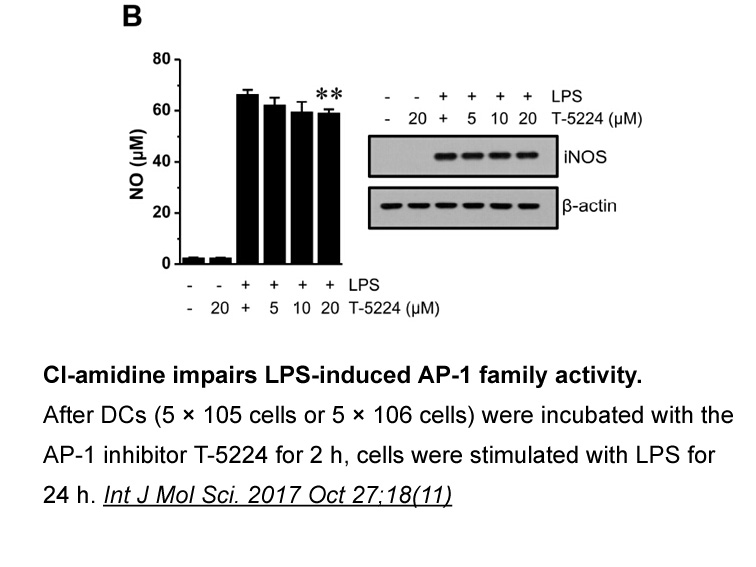
T lymphocytes play an important role in cellular and humoral immunity and immune responses (Shin and Iwasaki, 2013; Schenkel and Masopust, 2014). T iap apoptosis mature after complex selection and differentiation in the thymus. They can express various membrane proteins, such as CD3, CD4, and CD8 m
-
In three groups independently proposed two different
2022-06-23
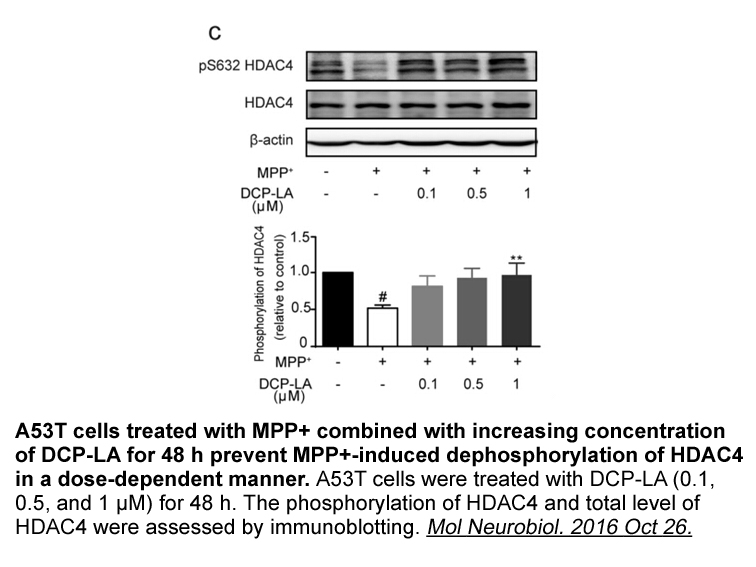
In 2001, three groups independently proposed two different mechanisms for the catalytic reaction of GlxI [5], [6], [7]. Richter and Krauss (RK) used HF/4–31G calculations of the active site, coupled with a frozen effective fragment potential description [8], [9] of eleven residues in the binding sit
-
br Introduction Glucokinase GCK hexokinase IV is
2022-06-23
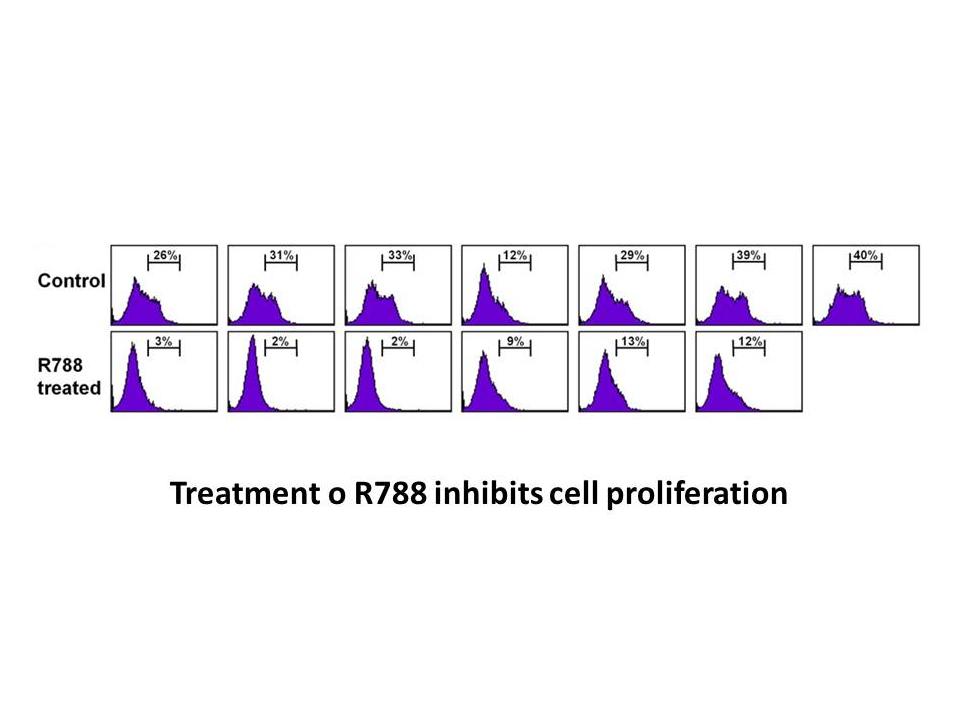
Introduction Glucokinase (GCK, hexokinase IV) is a monomeric enzyme that catalyzes the ATP-dependent conversion of glucose to glucose 6-phosphate, the first and rate-limiting step of glycolysis in the liver and pancreas [1,2]. GCK was first discovered in the early 1960's, and shortly thereafter i
-
In summary our findings provide the
2022-06-22
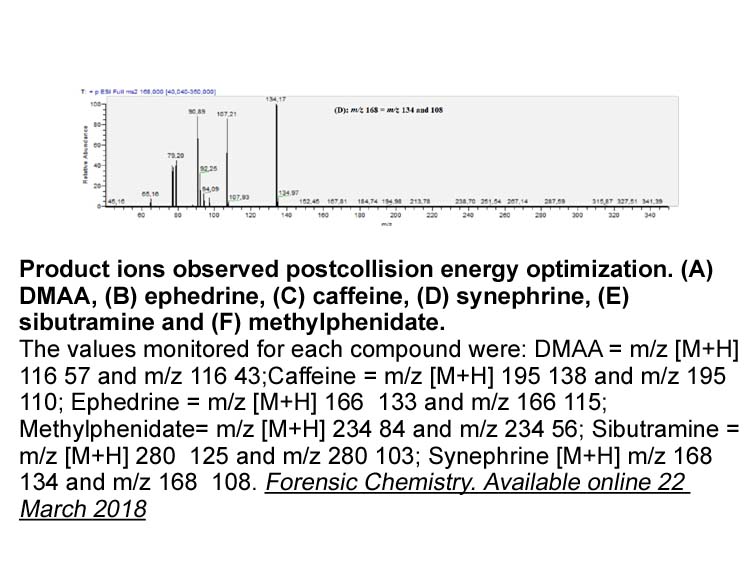
In summary, our findings provide the evidence and the mechanistic understanding of the protective effects of GIP receptor agonist, D-Ala2GIP, in the MPTP-induced neurotoxicity in mice. The observed protective effects are potentially due to reduced oxidative stress and attenuation of dopamine loss in
-
In conclusion our results show that
2022-06-22

In conclusion, our results show that multiple receptor populations can be expressed when α4, β3 and δ mRNAs are injected into Xenopus oocytes and include β3 homomeric; α4β3; and β3δ receptors. The previously unidentified β3δ can be differentiated pharmacologically from either β3, α4β3 and α4β3δ rece
-
The activation of GPR FFA signaling triggers
2022-06-22
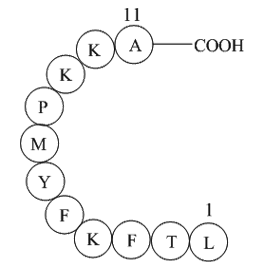
The activation of GPR40/FFA1 signaling triggers the PLC/PIP2 signaling pathway and results in Ca2+ release from the endoplasmic reticulum (ER). Increased Ca2+ levels may lead to activation of different protein kinases, such as Ca2+/calmodulin-dependent protein kinase type IV, Akt, extracellular sign
-
br RESULTS br DISCUSSION In this study we
2022-06-22
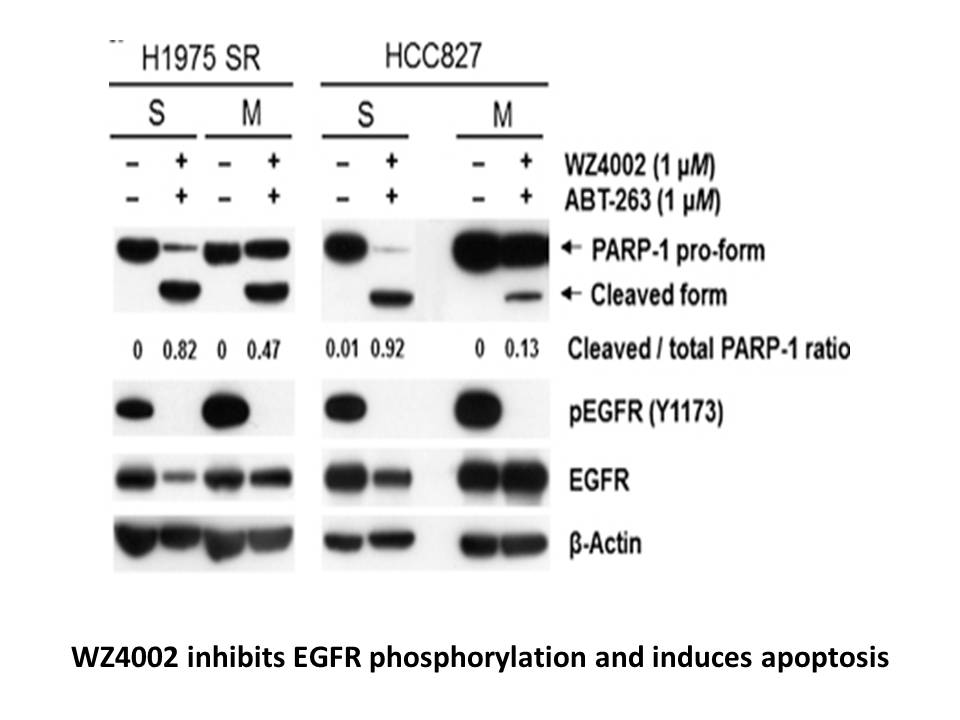
RESULTS DISCUSSION In this study, we found impaired apoptosis in the peripheral blood of RA patients when compared with peripheral blood from normal controls. Our previous studies have shown that the number of CD4 + T pkm2 increased while regulatory T (Treg) cells diminished in the peripheral
-
Sumoylation is involved in regulating protein protein intera
2022-06-22
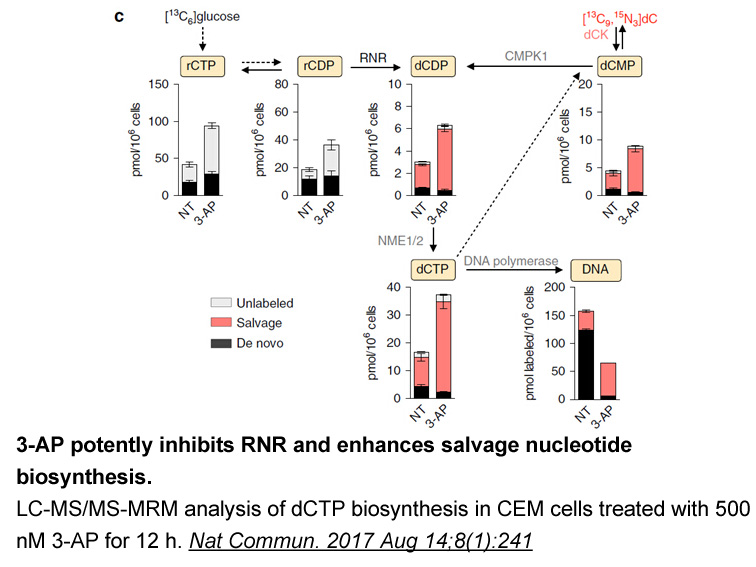
Sumoylation is involved in regulating protein-protein interactions, subcellular protein localization, protein stability, and transcriptional factor activity (reviewed in [29]). The small ubiquitin-like modifier (SUMO) protein is covalently attached to a lysine residue in a Ψ-K-X-D/E consensus sequen
-
FXa is a vitamin K dependent serine protease consisting
2022-06-22
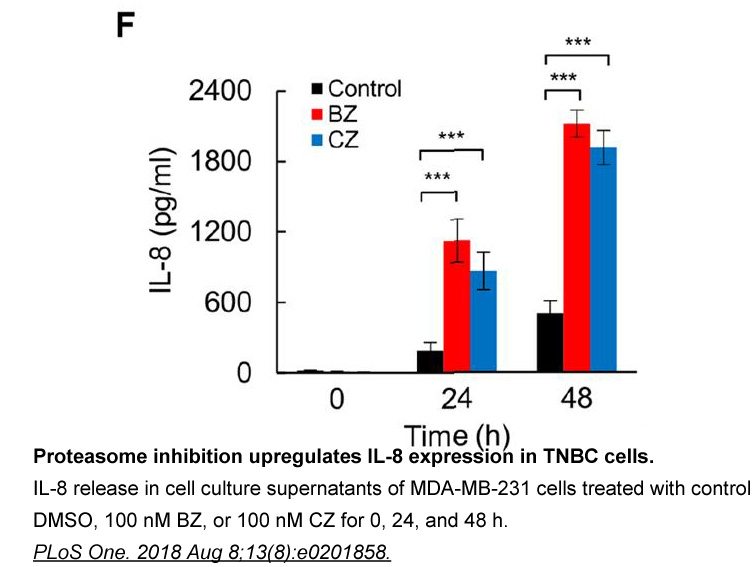
FXa is a vitamin K-dependent serine protease consisting of two chains linked by a disulfide bridge. The heavy chain contains 303 Itraconazole and the light chain has 139 amino acids. The catalytic triad comprised of Ser195, His57, and Asp102 exhibits the trypsin-like β-barrel structure [12]. The a
-
Enhancer of zeste homolog EZH which
2022-06-22
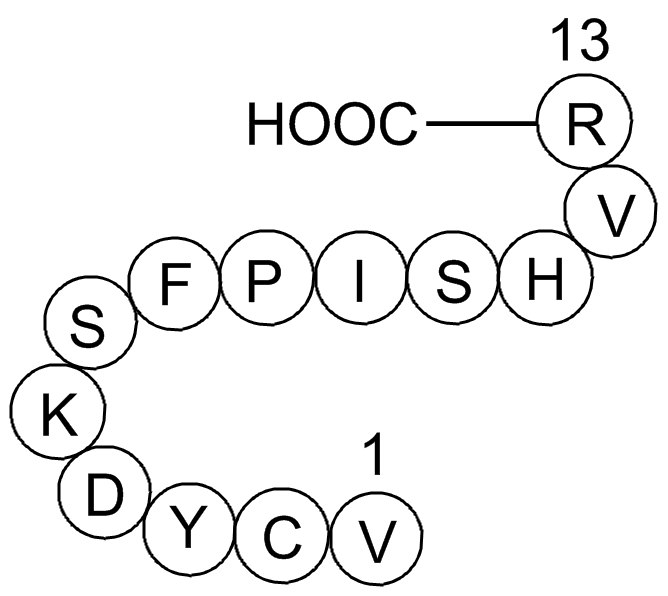
Enhancer of zeste homolog 2 (EZH2), which functions as a methyltransferase, is a critical subunit of polycomb repressive complex 2 (PRC2), which has been demonstrated to be involved in the development of the agi compound name [23]. Aberrant expression of EZH2 has been found to be associated with a
-
br Discussion Considering cardiovascular risk factors there
2022-06-22
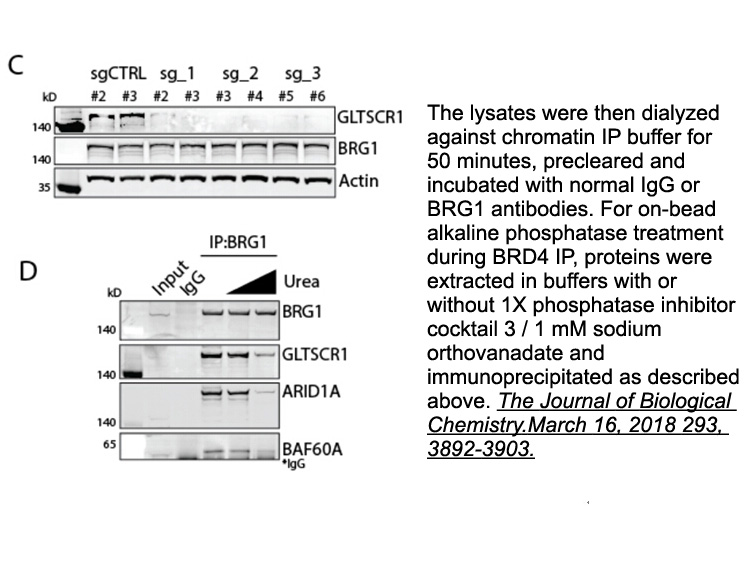
Discussion Considering cardiovascular risk factors, there was a significant difference in prevalence of dyslipidemia in both groups, 57.5% in HIV-infected stroke patients compared to 8.9% in the HIV-uninfected patients. These results are similar to that of Chow et al. who found a dyslipidemia pre
-
We also evaluated the effect of varying ionic str
2022-06-22
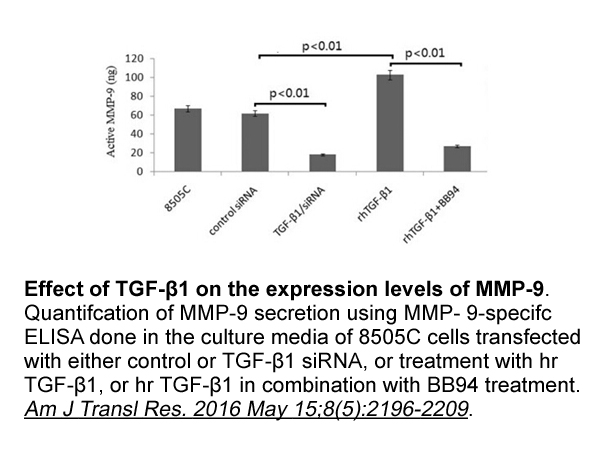
We also evaluated the effect of varying ionic strength. These experiments included previously characterized H3 (residues 1–21) and SNAIL (residues 1–9) peptides [8], [34] to allow a comparative analysis with different ligands (Fig. 1A). As shown in Fig. 2 and listed in Table 2, it is evident that a
-
In an RNAi screen to interrogate the function of transmembra
2022-06-22

In an RNAi screen to interrogate the function of transmembrane proteins in ISCs/EBs, we identified the SJ protein tetraspanin 2A (Tsp2A) as a tumor suppressor. Further characterization reveals that Tsp2A expression initiates in ISCs and Tsp2A protein assembles at the SJs in the progenitor Nelfinavir
-
br Introduction Circulating tumor cells CTCs are cancer cell
2022-06-22
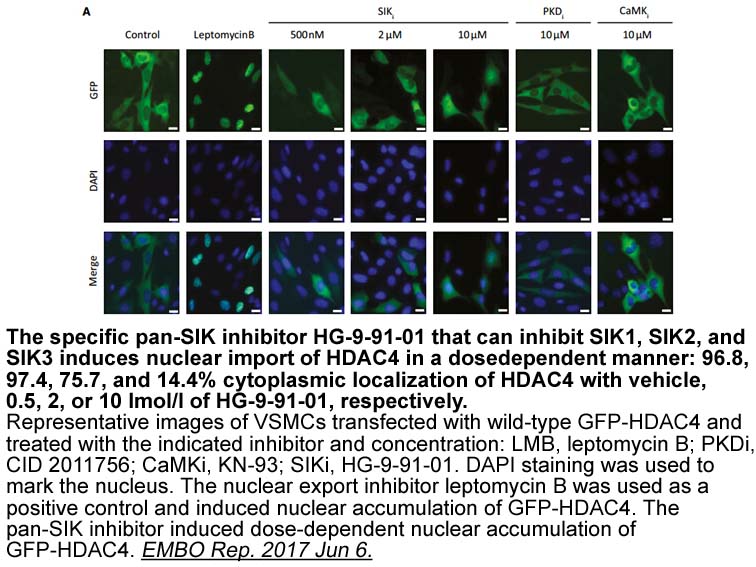
Introduction Circulating tumor BQ-788 sodium salt synthesis (CTCs) are cancer cells that have invaded blood vessels or lymphatics and are carried around the body by the blood. CTCs constitute potential seeds for metastasis because they can reach and implant into distant organs. The clinical impo
-
Different SVR rates have been
2022-06-22

Different SVR rates have been observed when comparing GT 1a- and 1b-infected patients receiving BOC or TLP therapy. The response rates in patients infected with GT 1b have generally been more favourable than in those with GT 1a [26]. In our study, persistence mutations were only observed in HCV GT 1
8612 records 475/575 page Previous Next First page 上5页 471472473474475 下5页 Last page